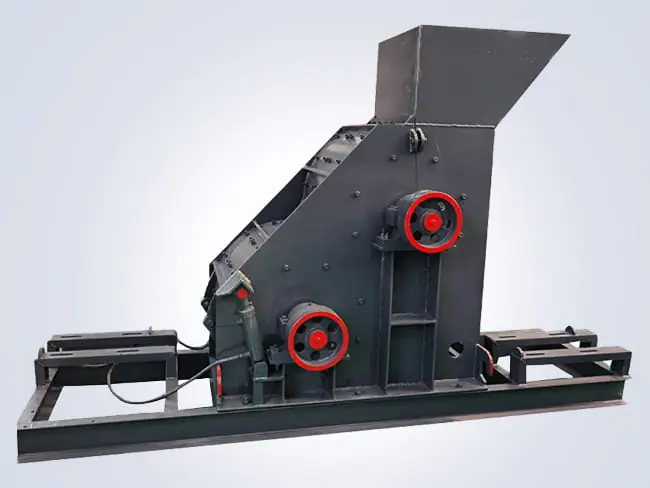
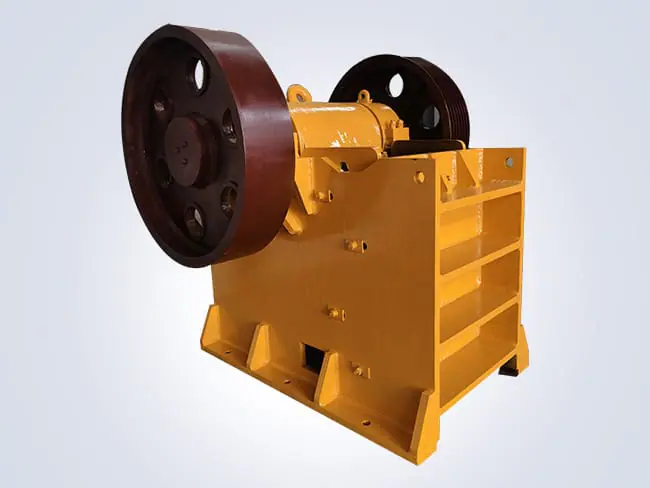
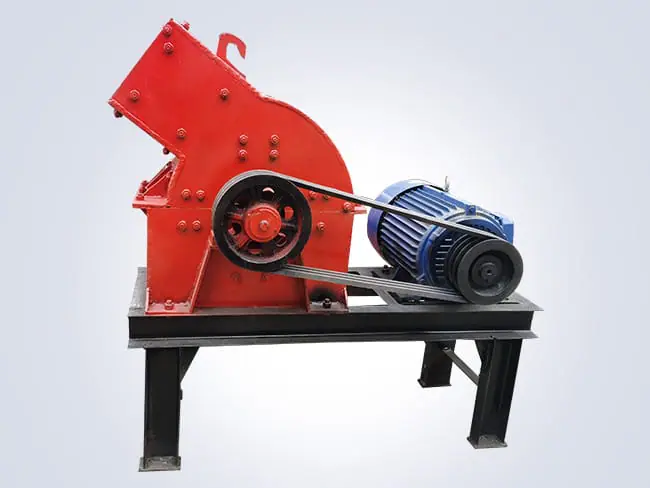
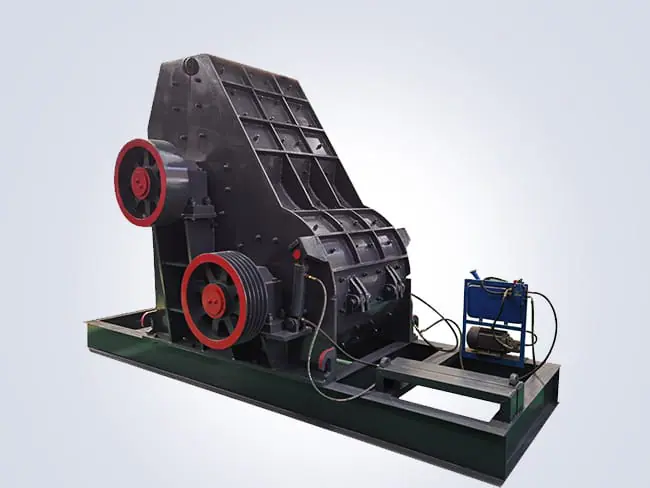
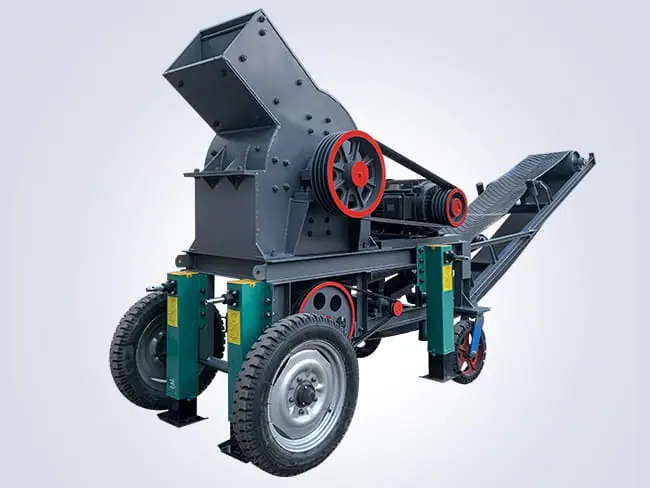
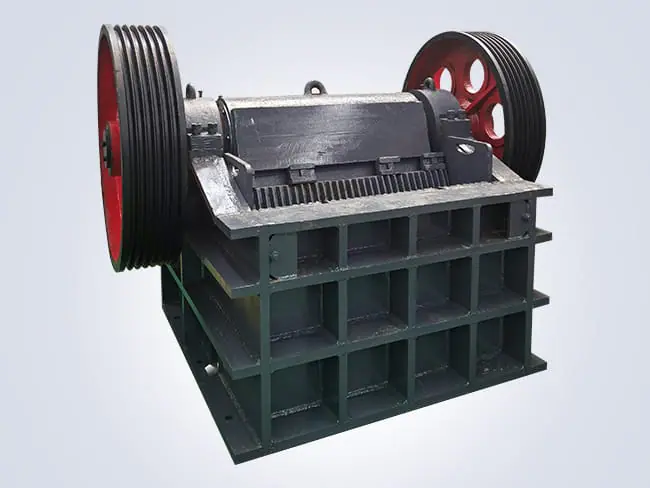
Jaw crusher, commonly known as “jaw crusher”, is the earliest and most widely used classic crushing equipment in the industrial crushing field. With stable and reliable performance, it has long occupied the core coarse crushing position in sand and gravel production lines and mining. This equipment is mainly used for coarse and medium crushing of various hard ores and rocks, and is suitable for materials with compressive strength of 147-320MPa. With the advantages of simple structure, strong durability, and convenient operation and maintenance, it has become an indispensable basic equipment in the field of construction machinery.
1、 Core structure composition
The overall structure of the jaw crusher is compact, sturdy, and durable, with clear division of labor for core components to ensure efficient operation of the equipment. It mainly consists of fixed jaw plate, movable jaw plate, eccentric shaft, pulley, elbow plate, frame and discharge adjustment device. The fixed jaw plate is securely installed on the rack and serves as the fixed crushing working surface of the equipment; The movable jaw plate is a movable component that forms a crushing chamber in conjunction with the fixed jaw. The eccentric shaft is the power core of the equipment, which drives the moving jaw to perform reciprocating motion through rotation, while the elbow plate has a dual function of transmission and safety protection. At the same time, the equipment is equipped with an adjustable discharge port device, which can flexibly adjust the discharge particle size according to production needs and adapt to different production standards.
2、 Working principle
The jaw crusher adopts the principle of curved compression crushing that simulates the movement of animal jaws, and the operation process is cyclically stable. During operation, the electric motor drives the pulley and eccentric shaft to rotate through a belt drive, driving the movable jaw plate to perform periodic up and down reciprocating motion. When the movable jaw moves upward, the angle with the fixed jaw decreases, and the material is subjected to multiple forces such as compression, splitting, and rubbing between the two jaw plates, achieving the crushing and decomposition of hard materials; When the moving jaw descends, the angle between the two jaw plates increases, and the crushed material is automatically discharged from the bottom discharge port by its own gravity. Materials that do not meet the standards are retained in the crushing chamber for further processing, and the entire cycle of operation ensures uniform and controllable crushing particle size.
3、 Core advantages of equipment
Compared to other crushing equipment, jaw crushers have outstanding advantages in adaptability and practicality. Firstly, the crushing chamber has a large depth, no dead corners in operation, high material feeding efficiency, and is not easily blocked. The single machine production capacity is stable, and the energy-saving effect is significant; Secondly, the overall rigidity of the equipment is strong, and the wear-resistant accessories have a long service life, which can handle high hardness and large materials for a long time, with an extremely low failure rate during operation; Thirdly, it is easy to operate and adjust, with a wide range of adjustable discharge particle size, and can accommodate various working conditions such as coarse and medium crushing; Fourthly, the operation and maintenance cost is low, the universality of accessories is strong, the maintenance process is simple, and it is suitable for long-term continuous industrial operations.
4、 Main application areas
As the first crushing equipment on the production line, the jaw crusher has applications covering multiple industries. The mining industry can crush various types of metal ores such as iron ore, copper ore, and gold ore; In the field of building materials and infrastructure, building materials such as granite, basalt, and limestone can be processed; It is widely used in the initial processing of materials in industries such as highways, railways, water conservancy infrastructure, as well as chemical, ceramic, and construction waste recycling. It is the core main equipment for sand and gravel aggregate production and ore pretreatment.
5、 Key points of daily operation and maintenance
To ensure the long-term operation of equipment, daily operation and maintenance are particularly crucial. Regularly inspect the wear of wear-resistant parts such as jaw plates and elbow plates, and replace worn-out parts in a timely manner; Regularly lubricate transmission components such as eccentric shafts and bearings to reduce operational wear; Clean up the debris in the crushing chamber before homework, strictly prohibit metal foreign objects from entering the equipment, and avoid damage to the machine body; Adjust the size of the discharge port in a timely manner according to the material specifications to ensure crushing efficiency and finished product quality, effectively extending the service life of the equipment.