In the fields of manufactured sand production and solid waste recycling, traditional sand making machines generally suffer from problems such as screen clogging by wet materials, uneven finished products, and high rework rates, seriously affecting the efficiency of production lines. The dual-stage screenless sand making machine, as a specifically optimized specialized crushing equipment, overcomes the sand making challenges of high-moisture and high-viscosity materials by relying on its dual-rotor structure and unique screenless design. With its advantages of stability, high efficiency, strong adaptability, and low operating costs, it has become the preferred equipment for small and medium-sized sand and gravel production lines and solid waste resource utilization projects.
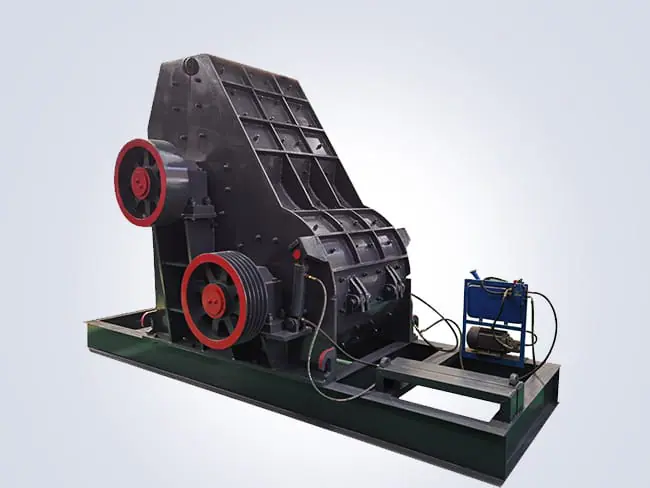
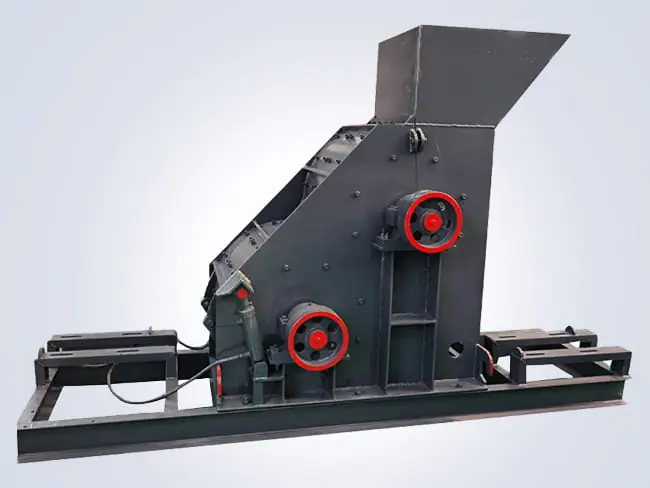
The core advantage of the dual-stage screenless sand making machine stems from its unique structure and working principle, which distinguishes it from ordinary single-stage sand making equipment. The equipment is equipped with two sets of high-speed rotors rotating in opposite directions, adopting a two-stage crushing process of “top coarse crushing and bottom fine crushing.” The material first enters the upper rotor for preliminary crushing, and then falls into the lower rotor for fine grinding and shaping. The entire process relies on a “hammer-on-material, material-on-material” crushing mode, allowing materials to collide and grind at high speed within the chamber. This eliminates the need for sieves, directly shaping the material and completely overcoming the structural shortcomings of traditional equipment that relies on screens for material control.
The screenless design is the core highlight of this equipment, completely solving a common industry problem. Traditional sand making machines’ screens are easily clogged by wet, sticky materials, frequently causing downtime for cleaning and equipment malfunctions, significantly reducing production efficiency. The double-stage screenless sand making machine eliminates the screen and grate structure, allowing materials to be discharged smoothly after crushing. Even with a material moisture content exceeding 20%, it can operate stably and continuously without clogging or material jamming, perfectly adapting to complex production conditions such as rainy weather, wet ore, and washed tailings.
In terms of production performance, this equipment has significant advantages.
The double-stage crushing structure ensures more thorough material crushing, resulting in uniform particle size and a reasonable gradation of the finished product. Fine sand below 3 mm accounts for over 95% of the finished product, eliminating the need for secondary screening and rework, significantly improving the finished product qualification rate. Meanwhile, the self-crushing operation mode reduces direct wear on wear-resistant parts such as hammers and liners, resulting in lower equipment wear and a longer service life. Combined with a simple machine structure, maintenance is convenient, effectively reducing production and operation costs, and energy consumption is superior to traditional sand-making equipment of the same specifications.
This equipment is suitable for a wide range of scenarios.
It can process medium-hardness ores such as limestone, shale, coal gangue, and bluestone to produce high-quality manufactured sand. It can also efficiently process solid waste materials such as construction waste, mine tailings, and slag, achieving waste recycling. It is widely used in building materials processing, road infrastructure, mining solid waste treatment, brick and tile production, and other industries, balancing economic and environmental benefits.
Today, the sand and gravel industry is becoming increasingly refined and green, and the sand-making of complex materials and the efficient recycling of solid waste have become industry necessities. With its core features of non-clogging, high-quality finished products, low energy consumption, and strong adaptability, the dual-stage screenless sand making machine has made up for the shortcomings of traditional sand making equipment, providing efficient solutions for small and medium-sized sand making production lines and solid waste resource utilization projects, and has become an important piece of equipment for improving quality and efficiency and promoting green development in the sand and gravel industry.