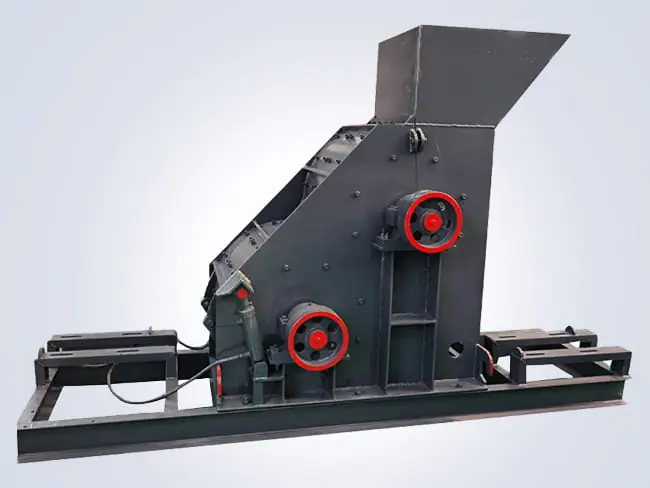
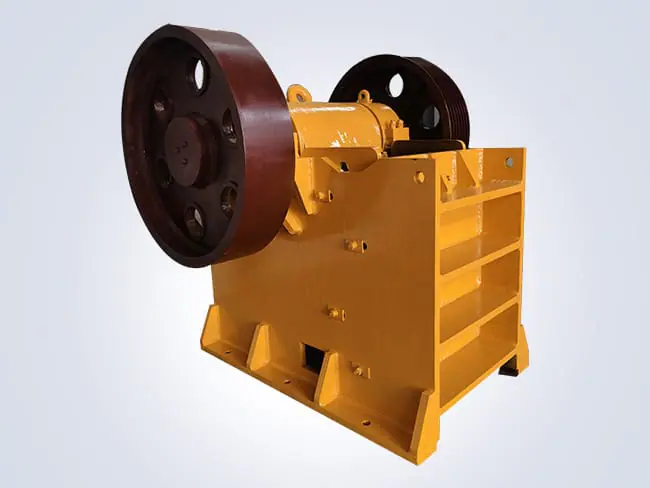
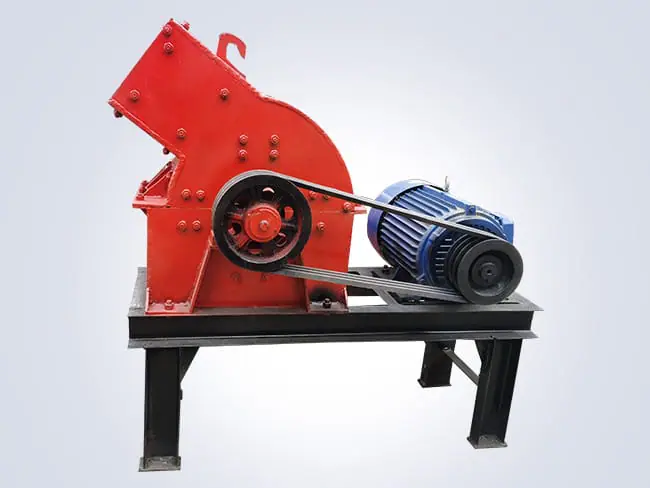
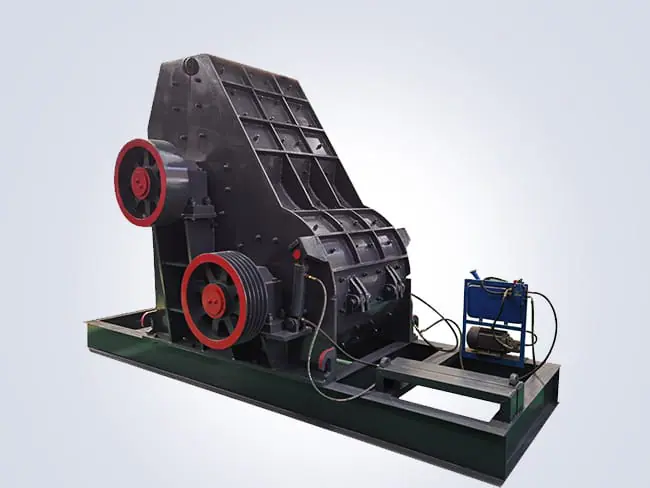
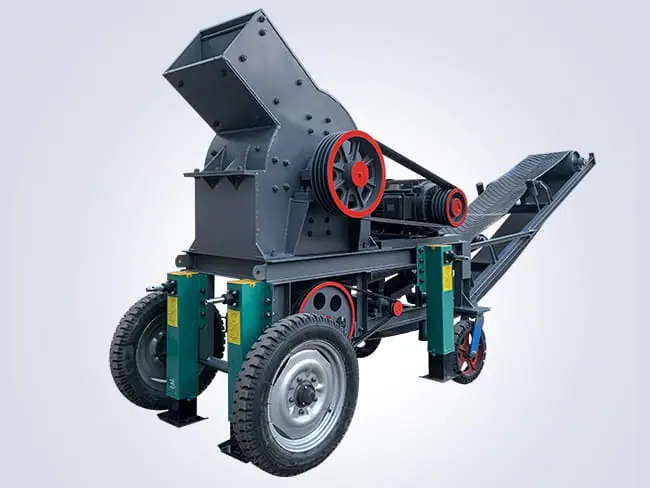
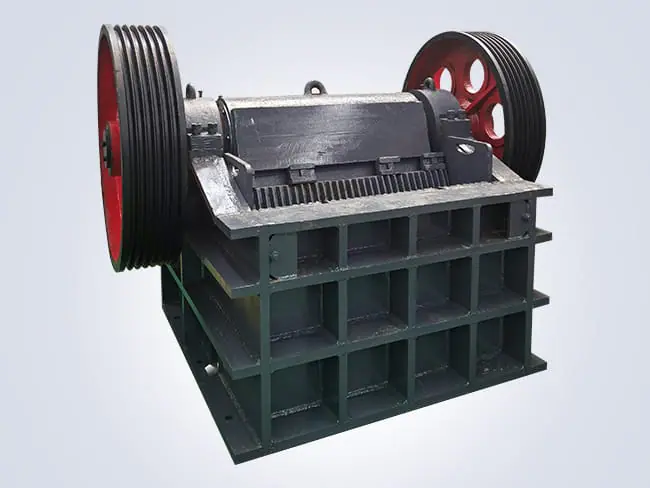
The jaw crusher is a core piece of equipment in ore crushing and construction aggregate processing. It is widely used in mining, metallurgy, building materials, highways, railways, water conservancy, and chemical industries. Its primary working principle involves the periodic reciprocating motion of the movable jaw relative to the fixed jaw. crushing the material entering the crushing chamber through the actions of compression, splitting, and bending between the two jaw plates.
Understanding the Industrial “Iron Teeth” – Jaw Crusher
The jaw crusher features a robust structure, mainly composed of the frame, movable jaw, eccentric shaft, jaw plates, and toggle plate. Its working process is as follows: the motor drives the belt and pulley, causing the eccentric shaft to move the movable jaw up and down. When the movable jaw rises, the angle between the toggle plate and the movable jaw increases, pushing the movable jaw plate toward the fixed jaw plate to compress and crush the material. When the movable jaw descends, the angle decreases. Under the action of the tension rod and spring, the movable jaw plate moves away from the fixed jaw plate, allowing the crushed material to be discharged from the lower opening of the crushing chamber, completing one working cycle.
This equipment is characterized by its simple structure, reliable operation, easy maintenance, wide applicability, and high crushing ratio. It is particularly suitable for the primary or secondary crushing of hard and medium-hard materials. With technological advancements. Modern jaw crushers continue to improve in areas such as energy efficiency, automatic control. and the application of wear-resistant materials, consistently providing reliable crushing solutions for various infrastructure construction projects.