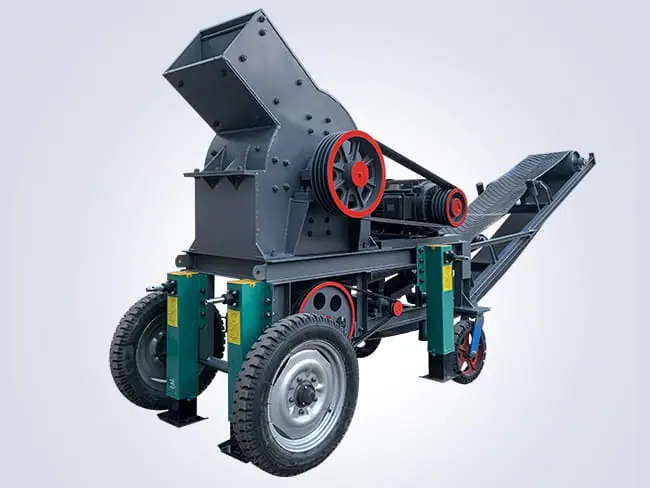
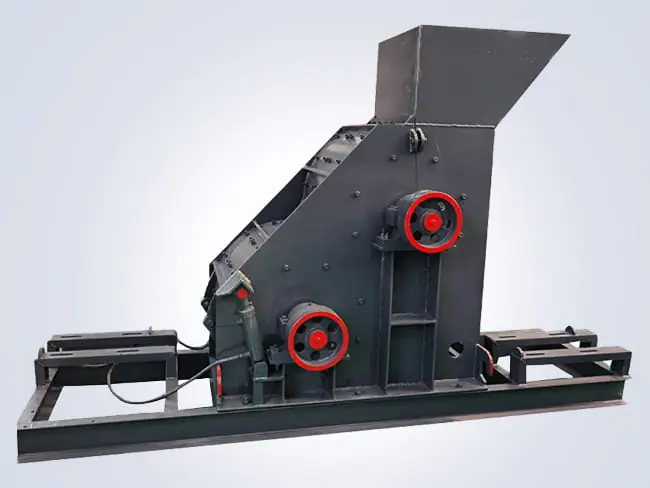
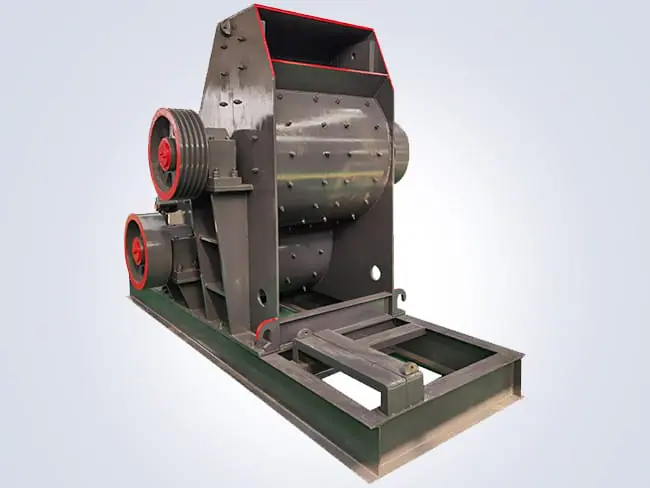
A jaw crusher is a primary crushing machine for mining and construction industries. It breaks large hard stones into uniform small particles. This heavy-duty crushing equipment suits granite, basalt, limestone and ore materials. It is the most widely used primary crusher in aggregate production lines.
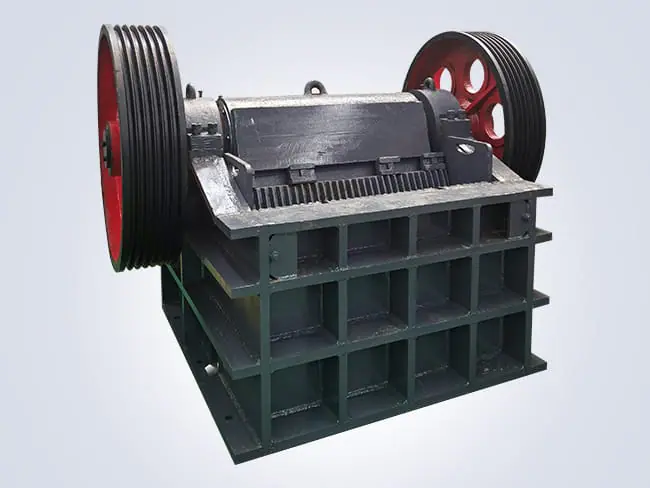
What Is a Jaw Crusher?
A jaw crusher relies on compressive force to crush raw stones. It has a fixed jaw plate and a movable jaw plate. The movable jaw swings repeatedly to squeeze raw materials. Continuous squeezing and grinding reduce stone size effectively.
This primary crushing device features simple structure and stable performance. It supports dry and wet crushing working conditions. It adapts to various harsh mining and quarry environments.
Core Working Principle of Jaw Crusher
The jaw crushing process follows fixed mechanical logic. A motor drives the eccentric shaft to rotate. The eccentric shaft pushes the movable jaw to generate periodic swing.
Materials enter the crushing chamber from the top feeding port. When the movable jaw closes, materials get squeezed and crushed. When the movable jaw opens, finished materials discharge from the bottom gap.
Circular crushing and discharging form continuous production. Users can adjust the discharge gap to control final particle size. This flexible adjustment meets different production standards.
Main Types of Jaw Crushers
Jaw crusher models divide into two mainstream types. Each type has unique application scenarios and performance advantages.
1. Swing Jaw Crusher (Simple Pendulum)
Simple pendulum jaw crusher has compact structure. It has fewer failure points and low maintenance cost. It fits small and medium crushing production lines. It is ideal for fixed quarry and construction waste crushing.
2. Compound Pendulum Jaw Crusher
Compound pendulum jaw crusher has higher crushing efficiency. Its movable jaw moves in compound tracks. It delivers finer discharging particle shape. It suits high-yield mining primary crushing projects.
Key Features of High-Quality Jaw Crusher
Standard industrial jaw crushers own multiple competitive advantages. These features support long-term stable operation.
First, it has strong crushing capacity. It handles high-hardness stones without blocking. The wear-resistant jaw plates extend service life greatly.
Second, it runs with low energy consumption. Optimized transmission structure saves power cost. It improves overall production economy.
Third, it boasts easy maintenance. The modular design simplifies part replacement. Operators can finish daily inspection quickly.
Fourth, it supports customized output size. Adjustable discharge gap adapts to sand making and road base material production.
Common Application Scenarios
Jaw crushing equipment covers multiple industrial fields. It is an essential core machine for raw material processing.
Mining industry: It crushes iron ore, copper ore and gold ore. It provides qualified raw materials for secondary grinding and screening.
Construction aggregate: It processes granite, basalt and river stone. It produces standard stones for highway and building construction.
Construction waste recycling: It crushes abandoned concrete and bricks. It realizes resource reuse of construction waste.
Chemical and cement industry: It crushes bulk raw materials. It provides fine materials for subsequent processing procedures.
Jaw Crusher Maintenance Tips
Regular maintenance prolongs jaw crusher service life. It reduces downtime and improves production efficiency.
Check jaw plate wear regularly. Replace severely worn plates in time. Avoid uneven particle size and reduced crushing capacity.
Lubricate bearings and transmission parts periodically. Good lubrication reduces mechanical friction loss.
Clean internal dust and residual materials before shutdown. Prevent material caking and equipment blockage.
Check motor and circuit stability frequently. Ensure safe and continuous equipment operation.
How to Choose a Suitable Jaw Crusher
Users need to select jaw crushers based on actual demands. Three core factors determine matching degree.
First, confirm raw material hardness. Choose high-power models for high-hardness ore. Select conventional models for soft limestone materials.
Second, match daily production capacity. Small crushers fit small quarries. Large heavy-duty models support large-scale mine production lines.
Third, confirm finished particle requirements. Adjust model and gap range according to project standards.
Final Words
A jaw crusher is indispensable primary crushing equipment. It has stable performance, wide application and low operation cost. It matches most stone crushing and mineral processing projects.
Reasonable model selection and daily maintenance maximize equipment value. It helps users obtain stable and efficient production benefits.