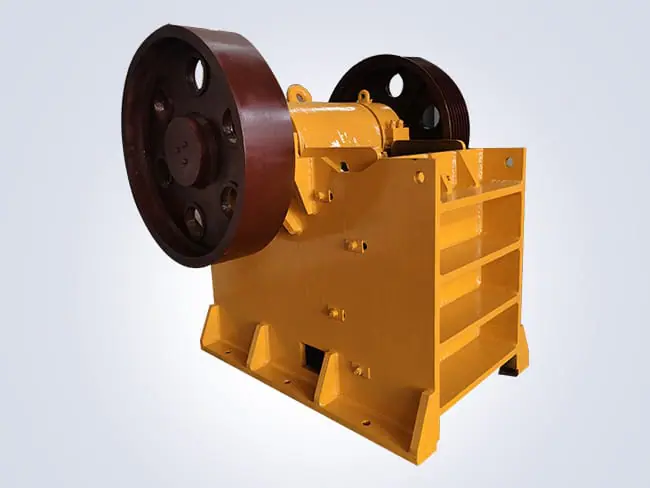
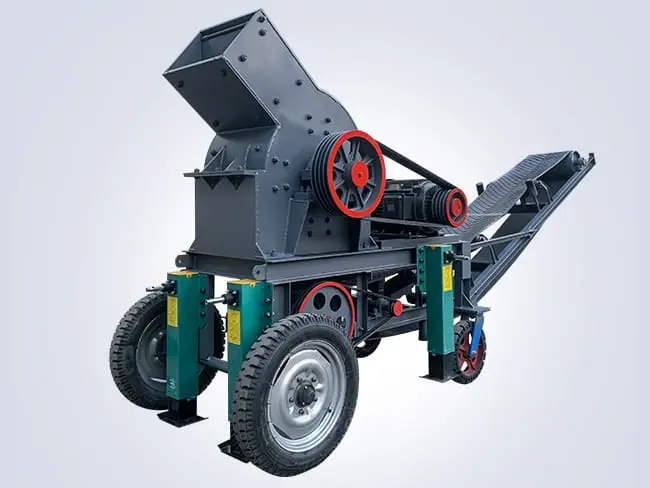
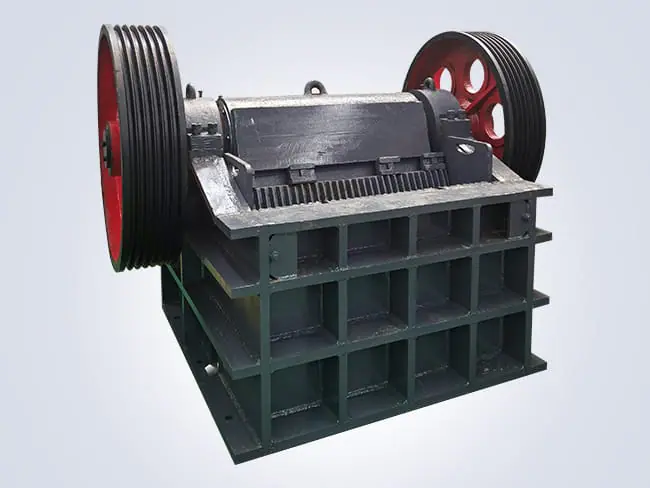
Many small‑and‑medium aggregate and recycling operators face a common headache: ordinary single‑rotor hammer crushers frequently get clogged when processing damp, clay‑mixed raw materials. Once sieve gaps are covered by sticky mud, output drops sharply, motors overload, and operators must spend hours cleaning blocked chambers. A two‑stage no‑screen base crusher (also known as double‑rotor non‑sieve fine crusher) was engineered to target exactly this industry pain point.
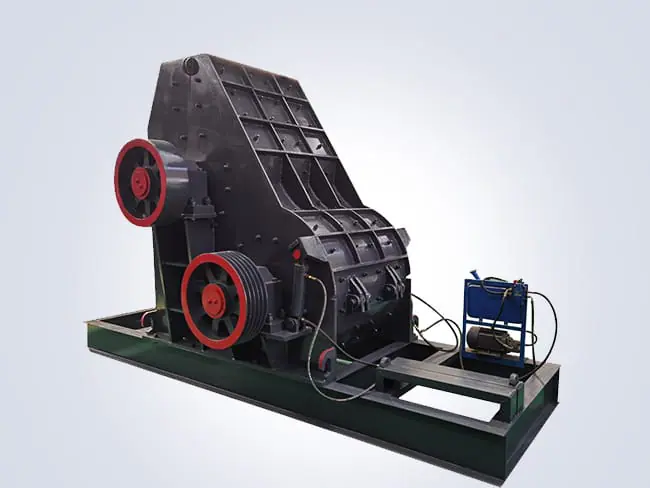
Unlike conventional multi‑machine layouts that need primary hammer crusher plus secondary fine crushing equipment, this machine packs two serially‑arranged rotors inside one single housing. It removes the traditional grate‑bar screen at the discharge bottom. This special structural design allows continuous processing of wet, sticky, medium‑hard brittle feed without blockage. This article covers structural differences, suitable and unsuitable materials, typical production‑line setups, real‑world limitations and practical retrofitting guidance for project planners and plant managers. Visit our two‑stage crusher product page to check stationary and skid‑mounted unit specifications from Hengtong Machinery.
Unique Structure & How It Differs From Single‑Rotor Hammer Crusher
Standard single‑rotor hammer crushers rely on bottom grate bars to control finished particle size. When moisture and clay enter, wet material sticks onto grate openings and quickly builds up blockages, even under moderate humidity conditions.
The two‑stage no‑screen crusher abandons grate‑bar components entirely:
- Raw material enters from the top feed hopper and receives high‑speed impact from the upper‑stage rotor for preliminary coarse breaking.
- Pre‑crushed material falls straight down into the lower‑stage rotor zone for secondary intensive impact and grinding.
- Final particle size is controlled by adjusting the clearance between hammer heads and inner counter liners. Qualified material discharges freely from the machine bottom without passing through any screen mesh.
Since there is no sieve to block wet feed, material moisture content up to 12‑15% can be handled smoothly. It completes both coarse crushing and fine sand‑making work inside one unit, which simplifies process flow and cuts the number of required devices on site.
Suitable & Unsuitable Raw Materials
Ideal feed for two‑stage no‑screen crusher
- Medium‑hard brittle stone: limestone, bluestone, shale
- Residue materials: coal gangue, cinder, furnace slag
- Recycling feed: broken bricks, low‑strength waste concrete blocks
- Wet, clay‑mixed stockpiles that easily jam ordinary hammer‑type machines
Materials NOT recommended
Extra‑hard, highly‑abrasive rock such as granite, basalt, high‑silica quartz. These hard stones accelerate hammer‑head wear dramatically. For high‑hardness rock sand production, pair jaw crusher with VSI sand making machine as your preferred configuration.
Typical Production‑Line Layout Options
Many overseas buyers misunderstand that the two‑stage crusher can run totally independently. In actual projects, matching auxiliary equipment greatly improves final product quality. Below are 2 mature practical layouts:
Layout 1: Stand‑alone compact setup (budget‑limited small‑plant)
Vibrating Feeder → Two‑Stage No‑Screen Crusher → Belt Conveyor → Stockpile Best for brick‑factory raw material preparation, coal‑gangue processing, low‑grade recycled aggregate for road base filling. No extra screening required if finished‑granularity requirements are loose.
Layout 2: Complete sand‑making configuration (higher‑quality finished‑sand demand)
Vibrating Feeder → Two‑Stage No‑Screen Crusher → Belt Conveyor → Vibrating Screen Oversize material can circle back into the crusher for re‑crushing. This closed‑loop setup stabilizes sand gradation for dry‑mortar raw material and low‑strength concrete aggregate.
Reminder: If your site frequently processes heavily muddy feed, install a pre‑screen before feeding to remove excessive soil in advance and extend hammer‑head service life.
Real‑World Strengths & Honest Limitations
Core Strengths
- Anti‑blocking performance for wet feed: No bottom grate bars, eliminates sieve‑paste blockage that troubles single‑rotor hammer mills in rainy‑season production.
- Process two crushing steps in‑one‑machine: Reduces total equipment count, saves site footprint and civil‑construction investment for small‑scale projects.
- Adjustable output granularity: Modify hammer‑to‑liner clearance to switch output between fine aggregate and manufactured sand.
- Flexible deployment: Available in stationary fixed version or integrated skid‑mounted unit, convenient to connect with mobile wheeled chassis for semi‑portable jobs.
- Optimized hammer‑head utilization: Reversible high‑alloy hammer design allows position shifting, raising overall wear‑part service life.
Important Limitations buyers should know
- Not suitable for high‑hard abrasive rock; wear‑part consumption will surge.
- Without grate bars, particle‑size control depends entirely on rotor‑liner gaps. For strict high‑grade concrete sand standards, post‑screening is mandatory.
- Dual‑rotor structure means higher total power consumption compared to single‑rotor hammer crusher of equal hourly throughput.
Practical Operation & Optimization Tips
- Feed‑size control: Do not exceed the maximum designed feeding lump size. Oversized chunks cause rotor vibration and abnormal stress.
- Wear‑part management: When replacing hammer heads, keep weight balance for each rotor. Do not replace only one single hammer piece, otherwise violent vibration will occur.
- Prevent metal foreign objects: Install magnetic iron remover before feeding. Scrap metal inside the chamber will create severe damage to hammers and liners.
- Monitor liner wear: Inner counter liners gradually wear after long‑time running. Larger liner gaps will make finished size coarser; adjust gaps or replace liners on schedule.
- Do not overload continuously: Even though it handles wet material well, long‑term over‑feeding will trigger motor overheating. Watch real‑time motor current during shifts.
FAQ
Q: Can two‑stage no‑screen crusher replace VSI sand making machine completely? A: No. Two‑stage crusher works well for medium‑hard and wet‑material fine crushing. VSI vertical‑shaft impact crusher produces better cubical particle shape for high‑quality construction sand. Choose according to your raw‑material hardness and finished‑product standards.
Q: What moisture level can this machine tolerate? A: Normally stable operation for moisture below 15%. If material carries very thick sticky mud, pre‑desliming is still suggested to lower wear‑part consumption.
Q: Can I retrofit my existing single‑hammer‑crusher site to use two‑stage crusher? A: Yes. Check foundation dimension, motor power and belt‑conveyor height. Hengtong Machinery can provide dimension drawing for retrofitting evaluation.
Conclusion
For small‑to‑medium projects troubled by wet‑material blockage, the two‑stage no‑screen crusher delivers very attractive overall cost‑performance. It simplifies crushing workflows and removes the frequent downtime caused by sieve clogging. However, buyers must evaluate raw‑material hardness and finished‑product requirements, since it is not a universal solution for every sand‑making scenario.
If you want capacity calculation, layout drawing or budget evaluation for your project, contact Hengtong Machinery engineering team. We offer customized technical advice according to your local material conditions. Please go to our two‑stage crusher product page to view detailed machine parameters.