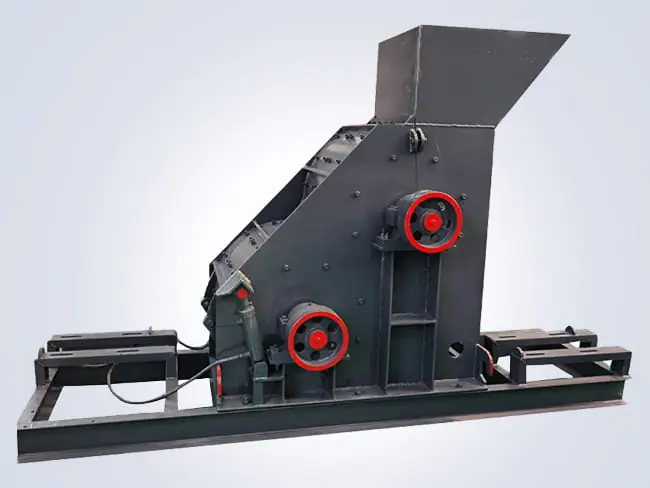
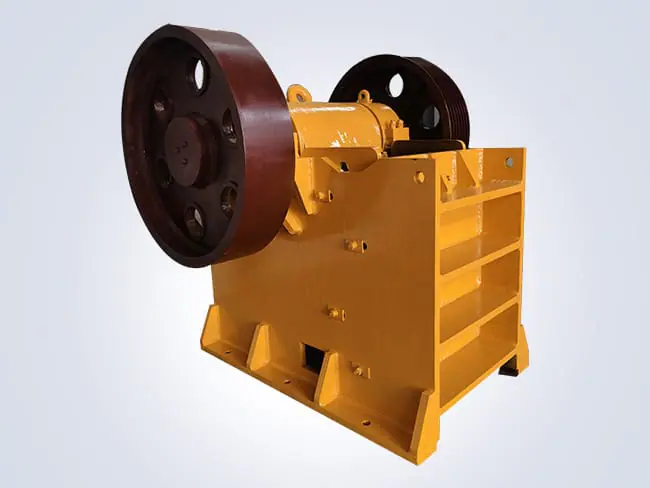
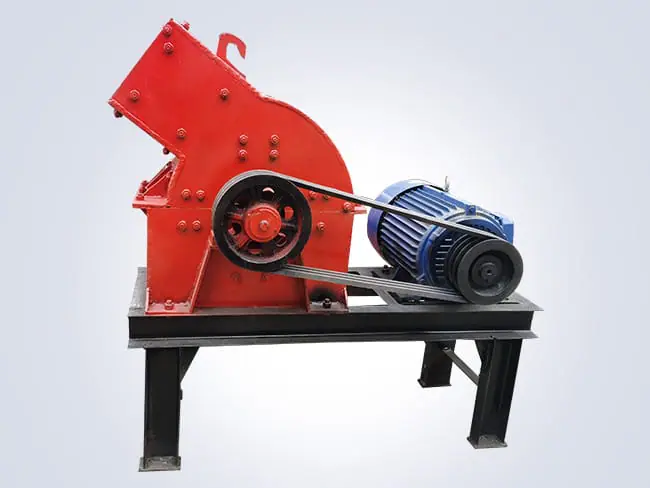
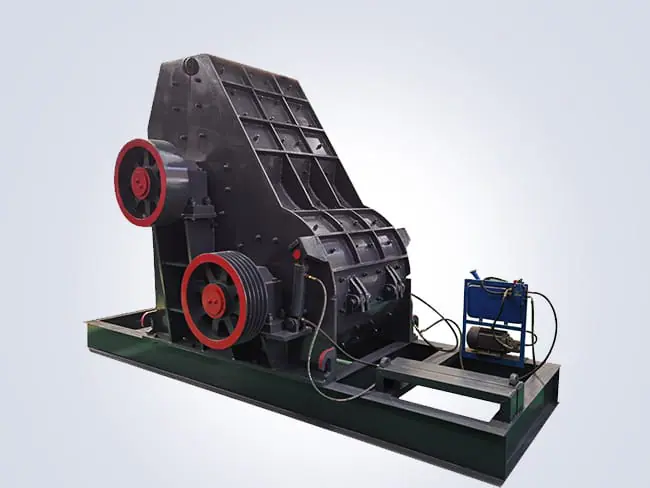
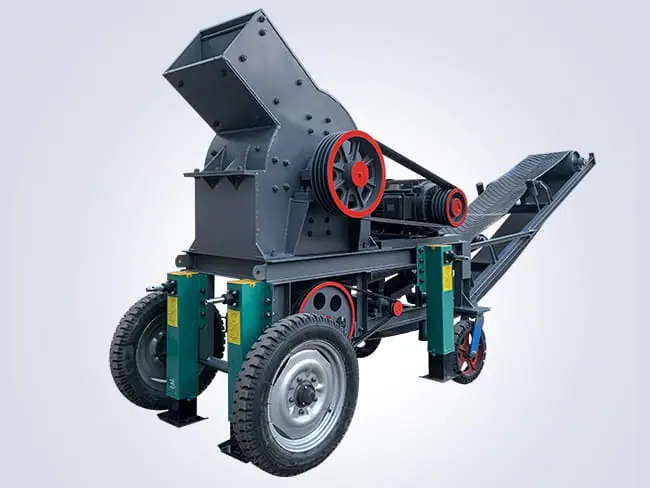
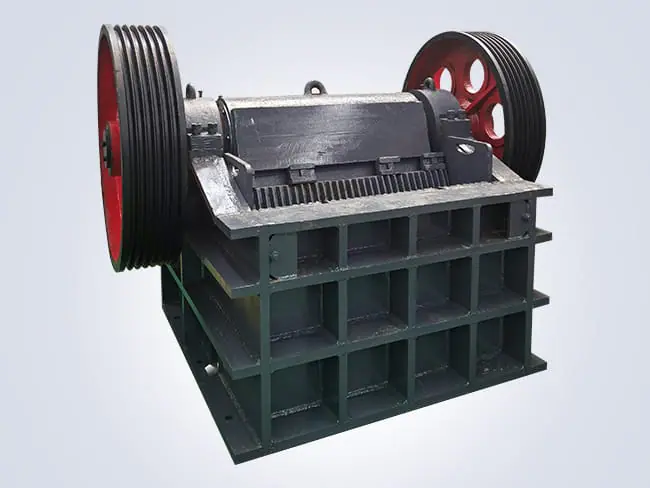
The hammer crusher is a key crushing equipment widely used in mining, construction materials, metallurgy, and other fields. It is renowned for its simple structure, high reduction ratio, and high production efficiency. Its core working principle involves using high-speed rotating hammers to impact and crush materials, reducing them to the required particle size.
Hammer Crusher: A Durable and Robust Primary Crushing Tool
A typical hammer crusher consists of main components such as the housing, rotor, hammers, grate bars, and impact plates. After entering the crushing chamber, the material is initially crushed by the violent impact of the high-speed hammers. The crushed material is then thrown against the impact plates, where it is further fractured by secondary impacts. Qualified material smaller than the gaps between the grate bars is discharged. While larger pieces continue to be ground by the hammers against the grate bars until they meet the required size specifications.
The advantages of this equipment are evident: compact structure, simple operation. And easy maintenance; its reduction ratio (typically 10-25) is much higher than that of jaw crushers, allowing large chunks of material to be reduced to medium or finer sizes in a single pass, thereby simplifying the process flow. It is particularly suitable for materials of medium hardness and brittle nature with compressive strength not exceeding 150 MPa, such as limestone, coal, gypsum, and chalk.
However, components like the hammers and grate bars wear relatively quickly when crushing hard or highly abrasive materials. And the operational noise and dust levels are relatively high. Therefore, in practical equipment selection. It is necessary to comprehensively consider material characteristics, product size requirements, and costs to maximize its effectiveness.