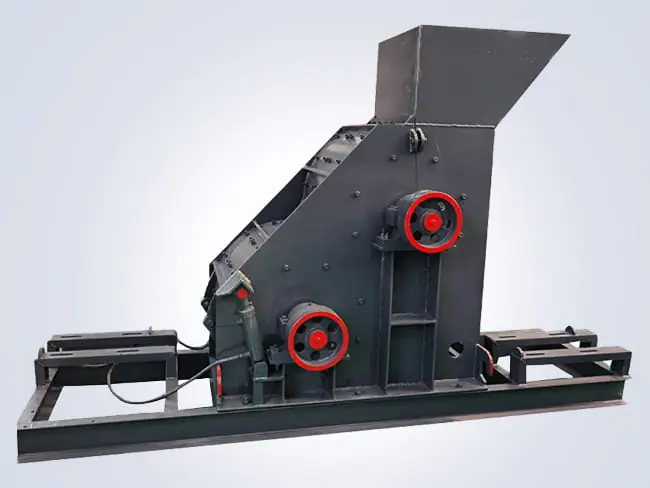
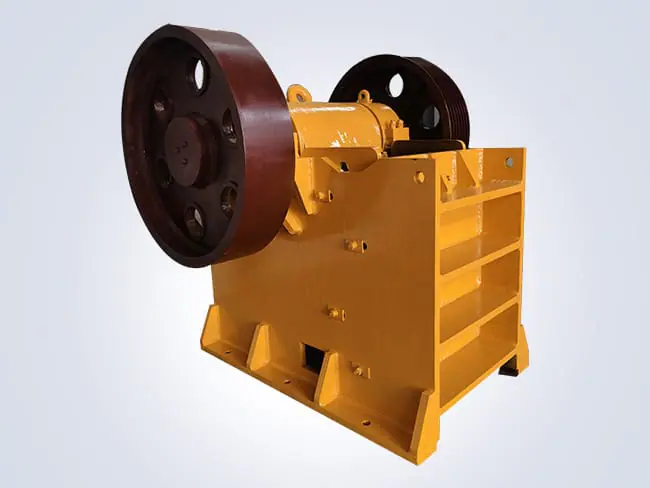
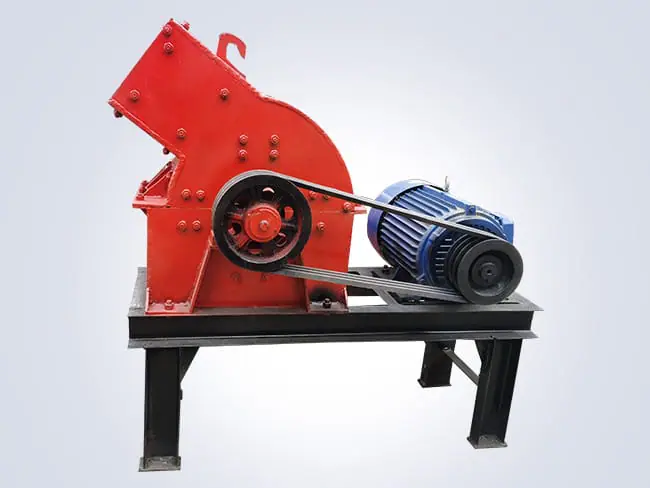
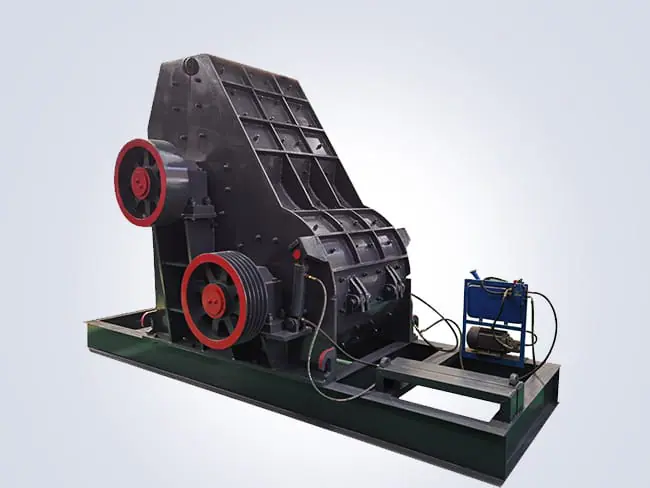
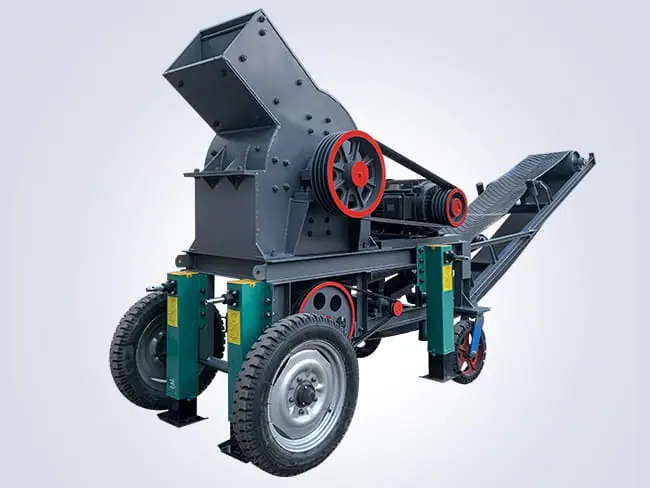
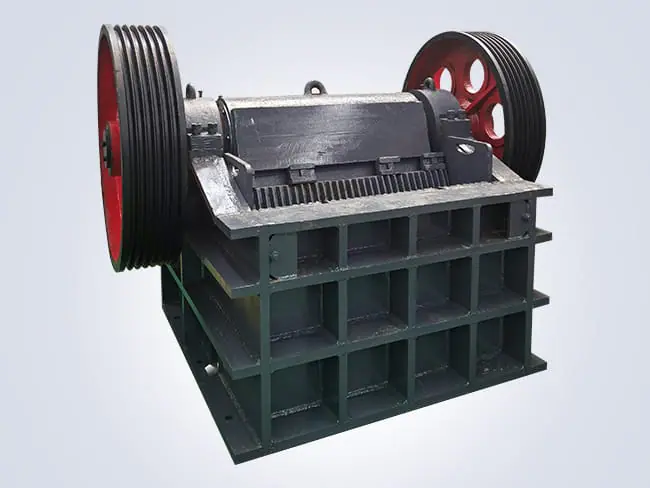
The hammer crusher is a widely used impact-type crushing equipment in the market, relying on high-speed rotating hammer heads to complete material crushing operations. With its simple structural design, it is commonly employed in various production lines such as sand and gravel processing, mining, building material production, and solid waste treatment.
The equipment primarily consists of a frame, rotor, hammer head, lining plate, grate bars, and power transmission components. The motor drives the rotor to rotate continuously, allowing materials to enter the crushing chamber from the feed end. Under the impact of high-speed hammer heads, the materials are crushed; the broken materials then collide with the chamber lining plate for further fragmentation, while particles also collide with each other to refine the size. Materials meeting the standard dimensions pass through the gaps in the bottom grate bars and are discharged outward, while larger-sized materials remain in the chamber for repeated impact and grinding until they meet the discharge requirements. Operators can adjust the spacing between the hammer heads and grate bars to flexibly alter the particle size of the finished product, adapting to the material standards required by different projects.
This equipment is suitable for processing medium- to low-hardness brittle materials such as limestone, coal gangue, shale, gypsum, and construction waste. Compared to various crushing devices, the hammer crusher features a compact overall structure, simplified disassembly and maintenance procedures, and low technical barriers for replacing wear-prone components. The initial investment and daily operational costs of the entire unit are relatively moderate. Under properly configured working conditions, it can achieve one-stage crushing and shaping, streamline production processes, reduce the number of supporting equipment in the production line, and optimize site layout.
All mechanical equipment has a suitable range of applications. Hammer crushers are not suitable for processing raw materials with high hardness and strong abrasiveness, and prolonged handling of high-moisture materials can easily lead to screen plate clogging. During the project selection phase, the corresponding model specifications should be matched by comprehensively considering factors such as raw material hardness, moisture content, feed size, and expected production capacity to ensure stable equipment operation.
To extend the service life of equipment, standardized maintenance is essential. Before daily production, it is necessary to remove metal debris from the crushing chamber, inspect the bolt fastening status, belt tension, and bearing lubrication; ensure uniform feeding during production to prevent concentrated influx of large chunks causing load impact; promptly clean the chamber accumulation after each shift, regularly check the wear of hammer heads and liners, and adjust or replace components promptly when significant wear is observed. Additionally, maintain the machine body seal to reduce dust dispersion and improve the working environment.
With continuous optimization of crushing processes, the hammer crusher has also undergone iterative upgrades, with ongoing improvements in sealing structures, wear-resistant components, and noise reduction designs. Leveraging its rich adaptability to various scenarios and simple operation, it remains a fundamental piece of equipment commonly used in small and medium-sized crushing production lines. By scientifically selecting models based on raw material characteristics and implementing routine maintenance, the equipment’s performance can be better optimized, ensuring stable support for the orderly operation of various stone processing and solid waste recycling projects.