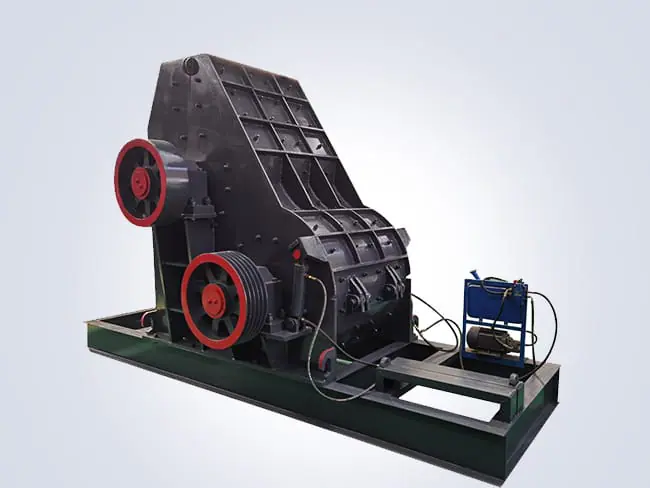
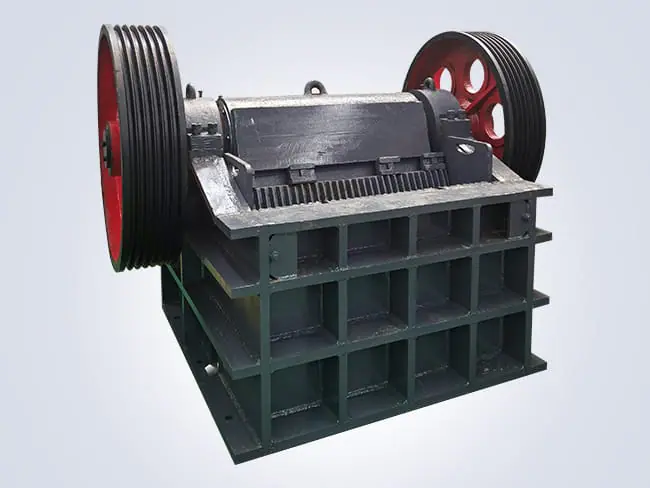
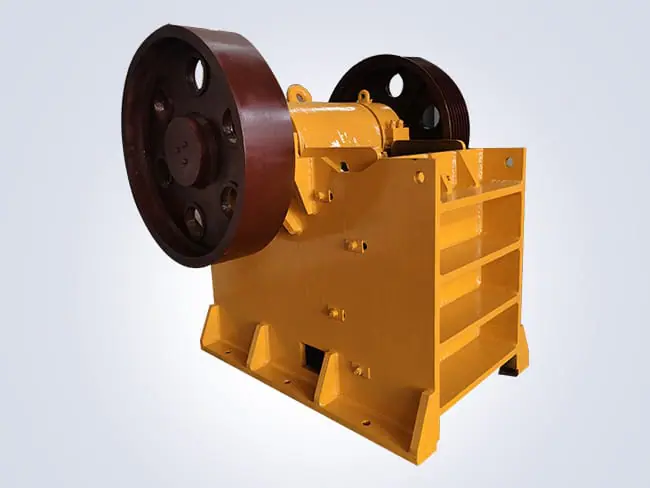
Hammer crusher, also known as PC hammer mill, is a widely used impact crushing equipment in mining, quarrying, construction waste recycling and building material industries. It uses high-speed hammer impact to break brittle and medium-hard materials into required particle sizes. Compared with jaw crushers for primary coarse crushing, hammer crushers can finish one-stage crushing and sizing, helping customers simplify production layouts and control investment costs.
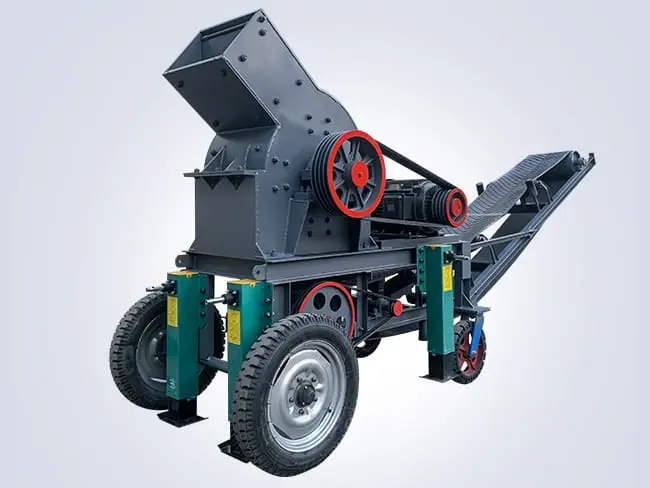
Working Principle
The motor drives the rotor to rotate at high speed through V-belts. Multiple wear-resistant hammer heads are mounted on the rotor. When raw materials enter the crushing chamber from the top feed opening, they are hit violently by rotating hammers. Broken materials gain kinetic energy and rush toward liner plates and grate bars inside the chamber.
Materials get crushed repeatedly by impact, collision and grinding. Particles smaller than the gap between grate bars will discharge through the grate; larger pieces stay inside the cavity and get crushed again until they meet the discharge standard. Users can adjust grate gaps to change finished size flexibly.
Suitable Materials & Application Scenarios
Hammer crushers fit brittle, medium-hard and low-abrasive materials. It is not recommended for very hard rocks with high silica content such as granite and basalt, which will cause fast wear of hammer heads.
Suitable raw materials: limestone, bluestone, coal, coal gangue, shale, clay brick, recycled concrete block, gypsum, slag.
Common application scenarios:
- Small quarry aggregate crushing line
- Coal and gangue processing plant
- Cement and brick factory raw material crushing
- Construction waste recycling site
- Road base material processing
- Dry mortar raw material preparation
It can work alone or match with vibrating feeder, vibrating screen and belt conveyor to form a complete crushing system. It can also be installed on mobile chassis for mobile crushing projects.
Main Advantages of Hammer Crusher
- High crushing ratio: It can directly crush large feed materials into fine aggregate in one pass, reducing multiple crushing stages.
- Simple structure: Compact design, fewer components, easy installation and transportation.
- Flexible output adjustment: Change grate bar clearance quickly to get different finished particle sizes.
- Low investment cost: Lower purchase price than cone crusher and VSI sand maker for medium brittle material processing.
- Easy access for maintenance: The machine body can be opened conveniently for inspection and replacement of hammer heads, liners and grate bars.
- Stable running performance: Suitable for continuous 24-hour operation under normal working conditions.
How to Choose the Right Hammer Crusher Model
Before confirming your order, check these key points with your equipment supplier:
- Raw material type, hardness and moisture content
- Maximum feeding size
- Required hourly production capacity
- Target finished particle size
- Local power supply and site layout
- Whether anti-blocking structure or heavy-duty rotor is needed
Important tip: If your material is wet and sticky, ordinary hammer crusher with grate bars may get blocked. In this case, double stage sand making machine without screen is a better alternative.
Basic Operation & Maintenance Suggestions
Good daily maintenance can reduce unexpected downtime and extend service life:
- Check hammer head wear every shift. Flip or replace hammers evenly to keep rotor balance.
- Inspect grate bars, lining plates and fastening bolts regularly.
- Keep bearing parts well lubricated, check oil temperature and sealing condition.
- Remove metal impurities from feeding materials to avoid heavy impact damage.
- Do not start the machine with full material inside the crushing cavity. Clean the cavity before startup.
- Check vibration and current during operation; stop inspection once abnormal vibration appears.
FAQ
Q: What is the difference between hammer crusher and jaw crusher?
A: Jaw crusher is mainly for primary coarse crushing. Hammer crusher does medium and fine crushing. Hammer crusher can produce finished aggregate directly, while jaw crusher usually needs secondary crushing equipment.
Q: Can hammer crusher make manufactured sand?
A: It can produce fine crushed materials, but the particle shape contains more flaky grains. For high-standard cubic manufactured sand, VSI sand making machine is more suitable.
Q: Can it crush wet materials?
A: Ordinary hammer crusher with grate bars is easy to block when handling wet sticky materials. Choose no-screen double stage crusher if moisture is high.
Closing
Hammer crusher remains a cost-effective crushing solution for medium brittle materials. With proper model selection and routine maintenance, it delivers stable output and controllable operating cost for small and medium crushing projects. If you need technical parameters, production layout design or quotation, contact our engineering team for support.