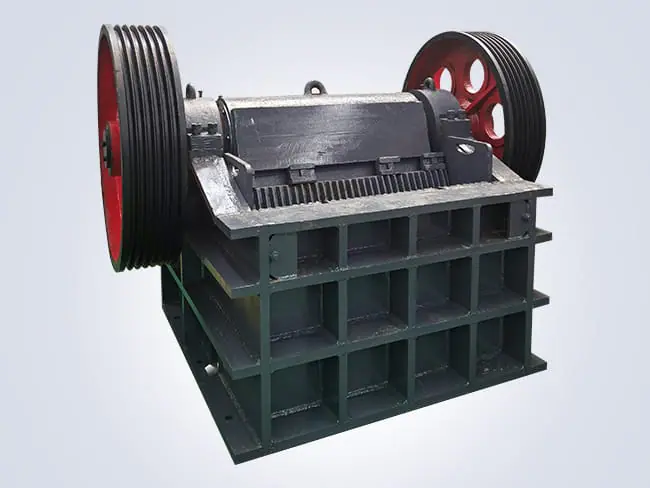
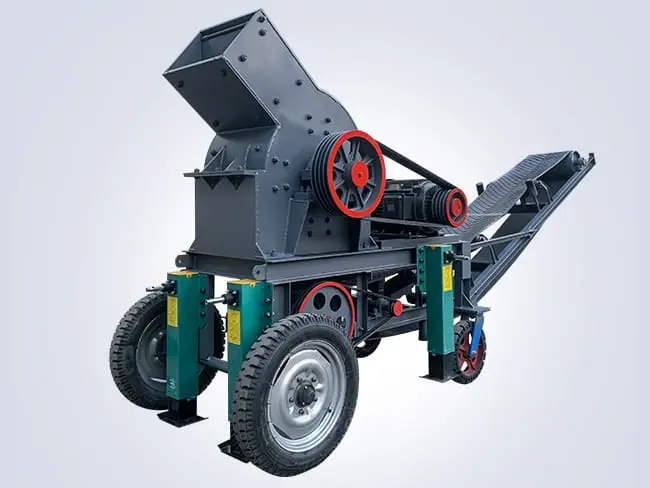
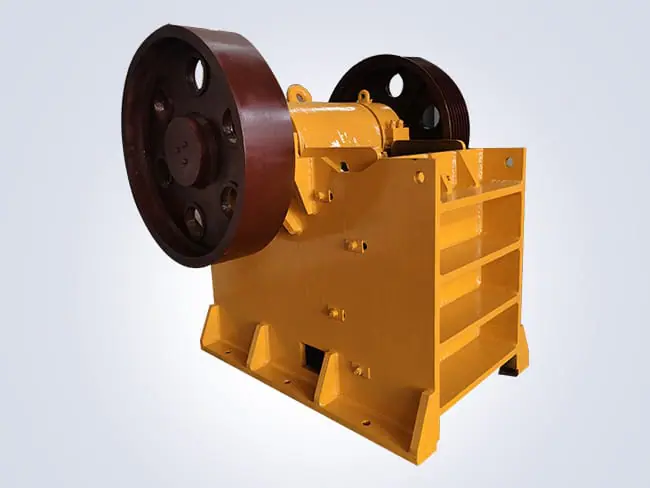
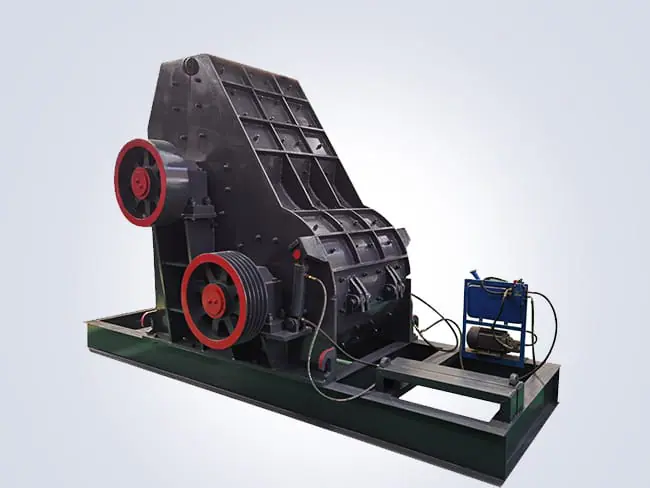
Traditional hammer crushers with screen bottoms often suffer from blocking and screen‑clogging when processing wet, sticky or high‑humidity raw materials. The two‑stage non‑screen base mill (also called two‑stage crusher) solves this industry pain point with special double‑rotor and screen‑free structure. This machine is popular among aggregate plants, construction waste recycling factories and coal‑gangue processing projects.
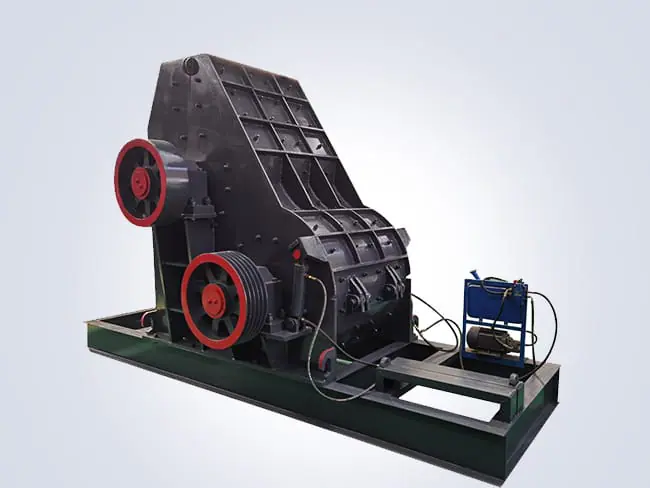
Working Principle of Two‑Stage Non‑Screen Base Mill
Different from single‑rotor crushing machines, this crusher is equipped with two groups of rotors arranged in series. Raw materials go through first‑stage rotor for preliminary crushing, then drop to second‑stage rotor for secondary impact and smashing. Without screen‑plate at the bottom, finished materials discharge directly according to impact crushing effect, no screen mesh to get stuck by wet clay or damp debris. Hammer heads keep striking repeatedly to get fine‑size finished particles.
Core Features & Benefits
- Handle high‑moisture materials without blocking The biggest highlight is non‑screen‑bottom design. Wet clay, damp construction waste, coal gangue, wet slag can be crushed directly without pre‑drying work. It avoids frequent shutdown for screen cleaning.
- Large crushing ratio & fine finished particles Two‑rotor continuous striking realizes large crushing ratio. Most finished output reaches fine granularity, which can be used for machine‑made sand and aggregate without secondary equipment in many scenarios.
- High‑alloy wearable hammer heads Hammer heads adopt high‑wear‑resistant alloy material. Shift‑clearance structure allows re‑use after partial wear, lowering your consumable‑part replacement cost.
- Compact layout & lower investment cost Integrated unit structure saves workshop floor space. One two‑stage crusher can replace two sets of single‑stage crushing machines, helping users save equipment purchasing budget.
- Simple maintenance & easy operation Electrical control system supports easy operation by single operator. Access openings make inspection and hammer‑replacement work convenient.
Suitable Raw Materials & Application Fields
The two‑stage non‑screen base mill can process both dry hard stones and wet sticky materials:
- Construction waste: waste bricks, concrete debris
- Mine waste: coal gangue, mine slag, tailings
- Medium‑hard stone: limestone, bluestone, river pebble
- Other materials: clay residues, building residues
Common projects:
- Construction waste recycling plant
- Small‑scale machine‑made sand production
- Coal gangue comprehensive utilization processing
- Solid waste resource recovery site
Points You Need To Know Before Purchase
- Confirm your raw material moisture content: this machine performs best for high‑humidity feedstock; for totally extra‑hard ore, it is better matched with jaw crusher as pre‑crushing equipment.
- Confirm target hourly throughput and required output particle size, our team can recommend proper rotor configuration.
- Power configuration: we support customized motor or diesel‑power version according to your local power supply situation.
FAQ for Two‑Stage Non‑Screen Base Mill
Q: Does two‑stage crusher need jaw crusher in production line? A: If your incoming stones have very large block size, we highly suggest adding jaw crusher for primary coarse crushing before feeding into two‑stage mill, to improve whole‑line efficiency. For medium‑size incoming materials, it can work alone.
Q: Can output particle size be adjusted? A: Yes. Output granularity can be adjusted by modifying rotor speed and gap between hammers.
Q: What is the typical capacity range? A: Capacity varies with different models, normally from 20 tons per hour up to 180 tons per hour, subject to raw material property.
If you are looking for a crusher that can handle wet and sticky materials without frequent blockage, reach out to HT Machinery to get technical proposal and quotation.