
+86 18236970567Sales hotline


With the global shortage of natural sand and rising environmental protection standards, high-quality manufactured sand has become the core raw material for infrastructure construction, mining, and concrete processing worldwide. As professional core crushing equipment, our series sand making machine (VSI vertical shaft impact crusher) integrates advanced international crushing technology, serving as high-efficiency, energy-saving, and eco-friendly sand making and stone shaping equipment for global industrial buyers. Adopting the dual working modes of “rock-on-rock” and “rock-on-iron”, this sand making machine realizes efficient fine crushing and aggregate shaping through high-speed rotor acceleration and material collision crushing. It perfectly solves the problems of uneven particle size and poor grain shape of traditional sand making equipment. The finished sand features uniform cubic grain shape, reasonable gradation, and low powder content, fully meeting the strict raw material standards for high-speed railways, highway projects, high-rise buildings, hydropower engineering, and municipal construction. This equipment boasts outstanding performance advantages in actual operation. Compared with traditional crushing equipment, its comprehensive energy consumption is reduced by more than 30%, while the output efficiency is increased by 25%–40%, helping enterprises greatly reduce long-term operation costs. The core wearing parts are made of high-strength wear-resistant materials, with a longer service life and lower […]

As the core primary crushing equipment in mineral processing, aggregate production and construction recycling industries, the jaw crusher has become indispensable heavy-duty machinery for global engineering projects. Designed for coarse crushing of various hard and abrasive materials, our series jaw crushers deliver stable performance, high efficiency and cost-effectiveness, winning wide recognition from clients across Africa, Southeast Asia, the Middle East and Europe. Our jaw crushers adopt classic compound pendulum crushing structure, combining optimized mechanical design and high-quality raw materials. The key wearing parts including jaw plates are made of high-manganese steel, and the core eccentric shaft is forged with high-strength alloy steel. This precision manufacturing process greatly enhances wear resistance and pressure resistance, enabling the machine to stably crush hard materials such as granite, basalt, iron ore and limestone. Even in harsh high-temperature and high-dust working environments, the equipment maintains low failure rate and long service life, adapting to diverse global operating conditions. Practicality and efficiency are the core advantages of our products. The adjustable discharge port meets different particle size requirements for primary crushing, perfectly matching the front-end processing needs of various crushing production lines. Meanwhile, we optimize the equipment energy consumption structure, effectively reducing operating costs while ensuring […]
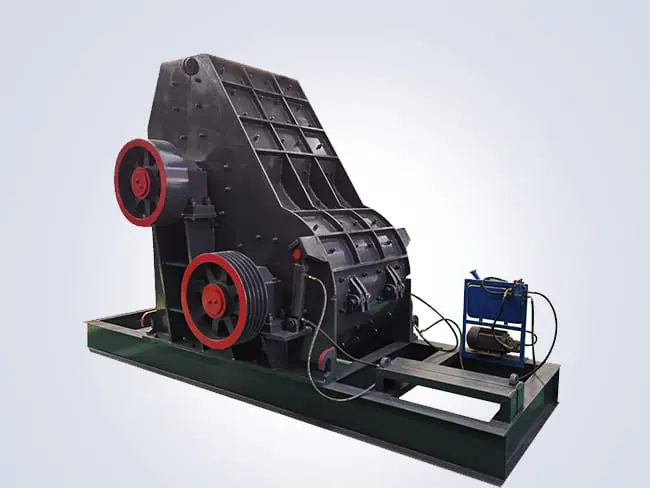
The hammer crusher is a core crushing equipment in industries such as mining, building materials, and chemicals. Utilizing the impact crushing principle, it achieves rapid material crushing. Due to its advantages of large crushing ratio, good forming effect, and simple operation, it has become the mainstream equipment in small and medium-sized material crushing production lines, widely used in processing medium-hardness brittle materials such as limestone, coal gangue, shale, and slag. The core working principle of the hammer crusher is high-speed impact crushing. During operation, the motor drives the rotor to rotate at high speed. The alloy hammers evenly mounted on the rotor move in a circular motion with the rotor. Material entering the crushing chamber is instantly crushed along its own texture and weak structures such as cracks under the violent impact of the high-speed hammers. The crushed material collides and compresses with each other, further refining the particle size. Material that meets the specifications is discharged through the gaps in the bottom grate, while oversized particles remain in the crushing chamber for continuous impact and grinding until they reach the discharge standard. It can complete the fine crushing of large materials in one pass, simplifying the production process. In […]
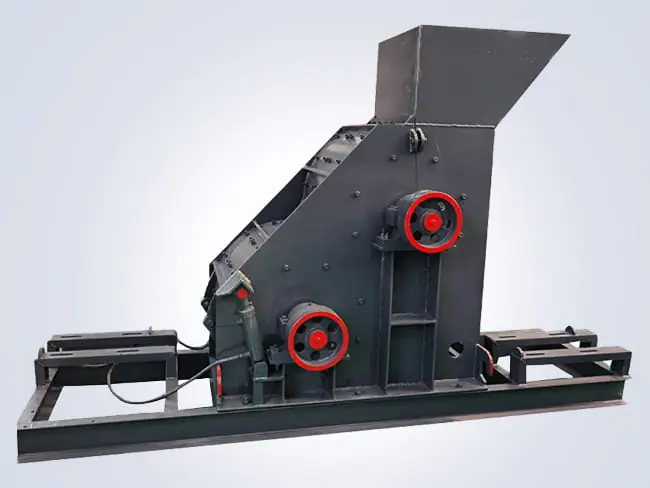
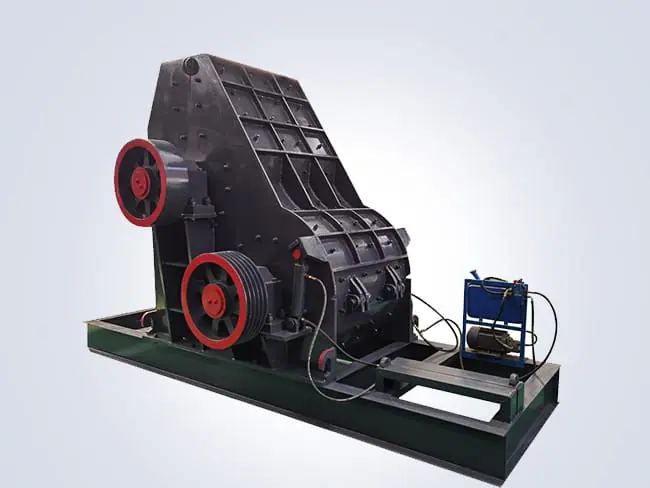
In the fields of manufactured sand production and solid waste recycling, traditional sand making machines generally suffer from problems such as screen clogging by wet materials, uneven finished products, and high rework rates, seriously affecting the efficiency of production lines. The dual-stage screenless sand making machine, as a specifically optimized specialized crushing equipment, overcomes the sand making challenges of high-moisture and high-viscosity materials by relying on its dual-rotor structure and unique screenless design. With its advantages of stability, high efficiency, strong adaptability, and low operating costs, it has become the preferred equipment for small and medium-sized sand and gravel production lines and solid waste resource utilization projects. The core advantage of the dual-stage screenless sand making machine stems from its unique structure and working principle, which distinguishes it from ordinary single-stage sand making equipment. The equipment is equipped with two sets of high-speed rotors rotating in opposite directions, adopting a two-stage crushing process of “top coarse crushing and bottom fine crushing.” The material first enters the upper rotor for preliminary crushing, and then falls into the lower rotor for fine grinding and shaping. The entire process relies on a “hammer-on-material, material-on-material” crushing mode, allowing materials to collide and grind at […]
The hammer crusher is a long-established and practical primary crushing equipment in the mining and building materials industries. It relies on the impact of high-speed hammers to crush materials. It is widely used for coarse and medium crushing of medium-hardness brittle materials such as limestone, coal, gypsum, and coal gangue. It is commonly used as a pre-treatment device in sand and gravel production lines, building material raw material processing, and solid waste disposal production lines. With its moderate investment cost, simple operation, and large crushing ratio, it has long played a vital role in industrial material crushing. The core working mechanism of the hammer crusher consists of a main shaft, rotor, articulated hammers, casing liners, and bottom screen bars. Its operating logic is intuitive and easy to understand. The motor-driven rotor rotates at high speed within the crushing chamber. Lump materials are fed into the chamber through the upper inlet and subjected to intense impact, shearing, and grinding by the high-speed swinging hammers. Large pieces break along their own grain and fissures. The crushed material falls downwards; particles smaller than the gaps in the bottom screen bars are discharged directly through the screen openings, while larger pieces that do not […]
Against the backdrop of steadily advancing infrastructure projects and increasingly stringent control over natural sand and gravel resources, manufactured sand has become the primary source of aggregate for concrete, subgrade filling, and hydraulic engineering. As the core fine crushing equipment in artificial sand production lines, the vertical shaft impact sand making machine, with its mature crushing technology and stable output quality, is widely used in various fields such as sand and gravel processing and solid waste recycling. It is an indispensable piece of equipment for standardized production of sand and gravel aggregates. The sand making machine, also known as the impact crusher, primarily relies on the dual crushing principles of “stone-on-stone” and “stone-on-iron” to process materials. Large stone materials enter the machine from the top feed inlet, where they are diverted by the internal distribution device. Some materials fall onto the high-speed rotating impeller, which throws them out at high speed under centrifugal force. These materials collide with naturally falling stones to achieve initial crushing. The mixed materials continue to impact the inner material lining of the crushing chamber, undergoing multiple impacts, grinding, and shaping processes to ultimately form uniformly sized sand. The machine can flexibly switch crushing modes based […]
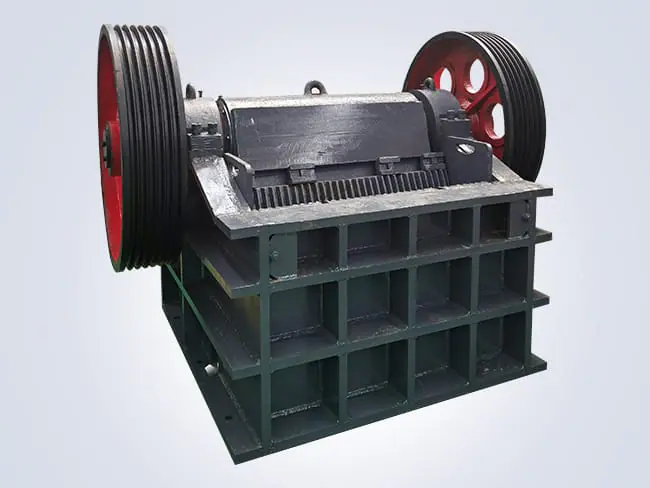
Jaw crusher, commonly known as jaw crusher in the industry, is a widely used coarse crushing equipment in the fields of stone processing and mining. The equipment relies on the reciprocating motion of the moving jaw and fixed jaw to simulate jaw biting, and completes the crushing of large materials through squeezing, bending, and splitting. It has long been used as the first crushing process equipment in sand and gravel production lines and continues to play a role in infrastructure, mining, solid waste treatment, and other scenarios. From the perspective of structural principles, the entire machine is mainly composed of a frame, eccentric shaft, movable jaw assembly, jaw plate, transmission components, and adjustment device. The motor drives the pulley to drive the eccentric shaft to rotate, driving the movable jaw to make periodic swings; When the moving jaw approaches the fixed jaw, the material inside the cavity is compressed and broken; After the separation of the moving jaws, materials that meet the particle size requirements are discharged from the bottom discharge port by their own weight, while materials that do not meet the standards continue to be left in the crushing chamber for further processing. As a wear-resistant component that […]
The hammer crusher is a widely used impact-type crushing equipment in the market, relying on high-speed rotating hammer heads to complete material crushing operations. With its simple structural design, it is commonly employed in various production lines such as sand and gravel processing, mining, building material production, and solid waste treatment. The equipment primarily consists of a frame, rotor, hammer head, lining plate, grate bars, and power transmission components. The motor drives the rotor to rotate continuously, allowing materials to enter the crushing chamber from the feed end. Under the impact of high-speed hammer heads, the materials are crushed; the broken materials then collide with the chamber lining plate for further fragmentation, while particles also collide with each other to refine the size. Materials meeting the standard dimensions pass through the gaps in the bottom grate bars and are discharged outward, while larger-sized materials remain in the chamber for repeated impact and grinding until they meet the discharge requirements. Operators can adjust the spacing between the hammer heads and grate bars to flexibly alter the particle size of the finished product, adapting to the material standards required by different projects. This equipment is suitable for processing medium- to low-hardness brittle […]
With the increasingly strict control of natural sand and gravel mining, machine-made sand has gradually become the main source of aggregate for infrastructure projects. As a key equipment for fine crushing and shaping at the back end of sand and gravel production lines, sand making machines play an important role in industries such as construction, roads, water conservancy, and solid waste resource utilization, providing artificial sand and gravel raw materials that meet standards for various projects. Sand making machines are often referred to as impact crushers, and mainstream models are divided into vertical axis impact, composite, and building station integrated types. The core relies on two crushing modes, “stone to stone” and “stone to iron”, to complete material processing. After the material enters the equipment, it is divided by the sorting device, and a part of it enters the high-speed rotating impeller to accelerate and throw out. It collides and rubs with the divided stone in the cavity, and completes multiple cycles of fine crushing in the vortex crushing chamber. Then, the screening equipment controls the particle size of the discharged material, producing finished machine sand in the range of 0-4.75 millimeters. At the same time, it can synchronously complete […]
In the crushing processes of industries such as ore processing, sand and gravel aggregate production, and infrastructure solid waste treatment, jaw crushers serve as front-end coarse crushing equipment. With their mature and stable mechanical structure, they have been widely used in various hard material processing scenarios for a long time, making them indispensable foundational equipment for the entire crushing production line. The jaw crusher, commonly known as a jaw breaker, operates on a core logic that mimics the biting and crushing action. The entire machine is composed of components such as the frame, eccentric shaft, movable jaw, fixed jaw, flywheel, toggle plate, and spring adjustment assembly. The motor drives the eccentric shaft via a pulley, causing the movable jaw to perform periodic reciprocating swings. When the movable jaw approaches the fixed jaw, large chunks of material entering the crushing chamber are gradually broken by compression and splitting; as the movable jaw retracts, materials meeting the required particle size are discharged from the bottom outlet by gravity, completing the continuous crushing process through repeated cycles. The crushing chamber features a deep design with a wider upper section and a narrower lower one, eliminating internal dead zones. The material is crushed in […]
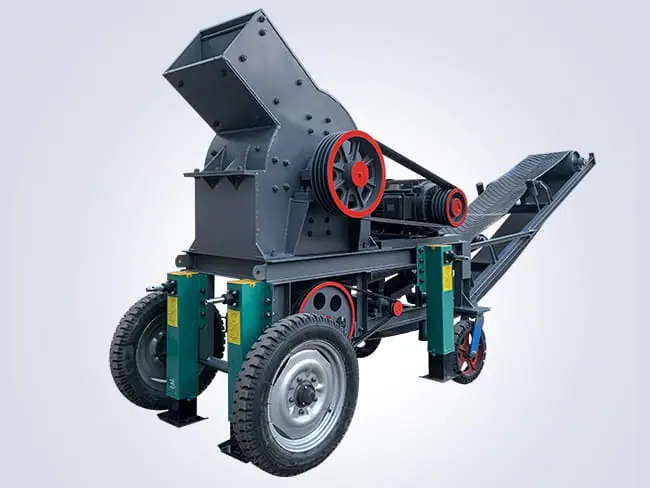
1、 Composition of equipment infrastructure The hammer crusher belongs to the impact crushing equipment, which is composed of a frame, transmission components, rotor assembly, crushing chamber lining plate, bottom sieve plate, feeding port and other components. The rotor is the core operating component, including the main shaft, hammer disc, pin shaft, and multiple sets of hammer heads. The hammer heads are made of wear-resistant alloy material and suspended by the pin shaft. During operation, they can expand with centrifugal force and can slightly retreat when encountering unbreakable hard objects, reducing the probability of damage to the machine body. The rack is made of thickened steel plates welded together, with a compact overall structure and sufficient operating space reserved for disassembly and maintenance; The bottom sieve plate can be replaced with different aperture specifications as needed to adjust the particle size of the discharged material. The entire set of components has clear division of labor, and each module is easy to disassemble and replace separately, reducing the threshold for later maintenance. 2、 Basic crushing operation principle The equipment relies on a motor to provide power, which drives the main shaft and rotor to rotate continuously through a pulley and coupling. The […]
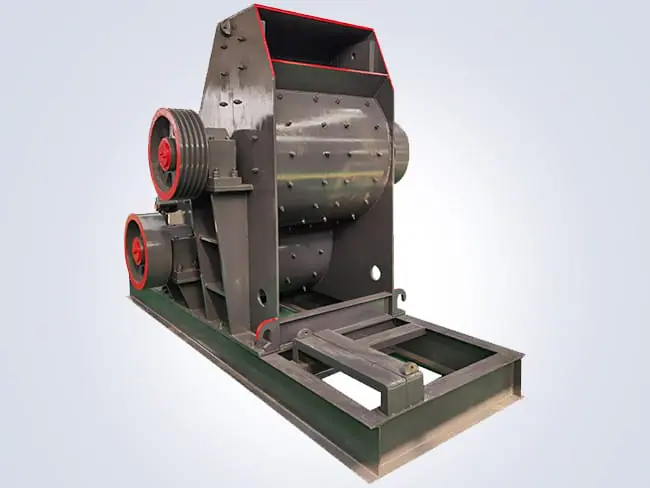
1、 Value and Development Background of the Equipment Industry Sand and gravel are indispensable basic raw materials for infrastructure projects. With stricter control over natural sand mining, machine-made sand has become the mainstream material in the industry. As a specialized equipment for fine crushing and shaping stone materials, sand making machines play a key role in sand and gravel production lines, adapting to various stone processing scenarios and supporting stable supply of various engineering aggregates. 2、 Core working principle and technological advantages The most commonly used vertical impact sand making machine in the current market relies on two crushing modes, “stone to stone” and “stone to iron”, to complete material processing. The operation mode can be switched according to the hardness of the raw materials. The material is fed into the machine body from the feeding bin and divided into two streams through the material separation structure. One stream enters the high-speed rotating impeller for acceleration and ejection, and collides with the other stream of naturally falling stone, repeatedly impacting the material lining inside the chamber. Through multiple impacts, friction and grinding, the fine crushing and shaping operation is completed, and finally the sand material that meets the building standards […]
